Chinese cooking on this page is Sichuan heat and hand work: kung pao chicken with dried chillies and Sichuan peppercorns, mapo tofu with its numbing mala tingle, and jiaozi — pork and cabbage dumplings folded by hand. Stir-frying and steaming are the two techniques to learn first; both are explained on the techniques page.
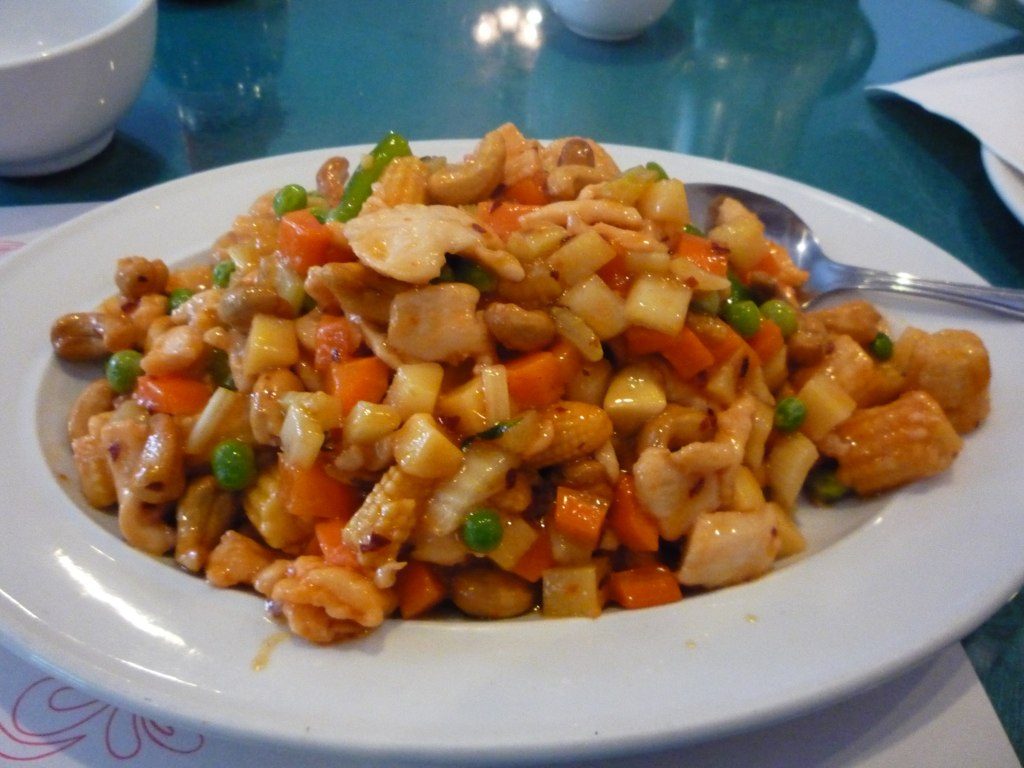
Sichuan classic built on the signature *málà* (numbing-spicy) tingle of Sichuan peppercorns and dried chilies, balanced by a sweet-sour-savoury sauce and crunchy peanuts. The original staple ingredients are peanuts, chiles and scallions (PepperGeek). The dish is named for Ding Baozhen, a Qing dynasty governor (the name means "Palace Guardian" chicken).
Ingredients
Marinade: 1.5 lb boneless, skinless chicken thighs, cut into small cubes; 1 tbsp soy sauce; 2 tsp cornstarch
Sauce: 1/4 cup water or chicken broth; 5 tbsp soy sauce; 2 tbsp balsamic vinegar; 2 tbsp Chinese Shaoxing wine or dry white wine; 2 tsp hoisin sauce; 1 tbsp brown sugar; 1 1/2 tsp cornstarch
Stir-fry: 5 green onions, cut into 1-inch pieces; 1/2 cup roasted salted peanuts; cooking oil (peanut or vegetable oil)
Method
Combine the chicken and marinade ingredients in a medium bowl; set aside for 20 minutes.
In a small bowl, whisk together all the sauce ingredients; set aside.
Prepare the aromatics.
Pre-heat a pan over medium-high heat and add 2 tbsp oil. Once glistening, add the chicken in a single layer (in batches if needed) and cook until done.
Reduce the heat to low, add 2 tbsp oil and allow ~15 seconds to warm. Add the peppercorns and stir vigorously until fragrant, about 30 seconds. Add the chilis, garlic and ginger.
Add the chicken back to the pan, stir until coated, then pour in the sauce and add the green onions and peanuts; toss until glazed. Serve with steamed rice.
Good to know: The PepperGeek excerpt ended after step 5; the final combine (step 6) follows Beyond Kimchee's method for the same dish ("return the chicken to the wok, pour in the sauce, add green onions and peanuts, toss until glazed"). Beyond Kimchee's quantities differ slightly (1 lb chicken; sauce 1 1/2 tbsp soy sauce, 1 tbsp Shaoxing wine, 1 tbsp Chinkiang vinegar or balsamic, 1 1/2 tbsp honey, 3 tbsp chicken stock, 1 tsp sesame oil, 2 tsp potato starch/cornstarch, 1/2 tsp Sichuan peppercorn powder; 4 green onions, 2 garlic cloves, 2 tsp ginger, 4–6 dried chili, 2 celery sticks, 1 small red pepper, 1/2 cup unsalted dry-roasted peanuts or cashews). There is no substitute for Sichuan peppercorns for the *málà* tingle.
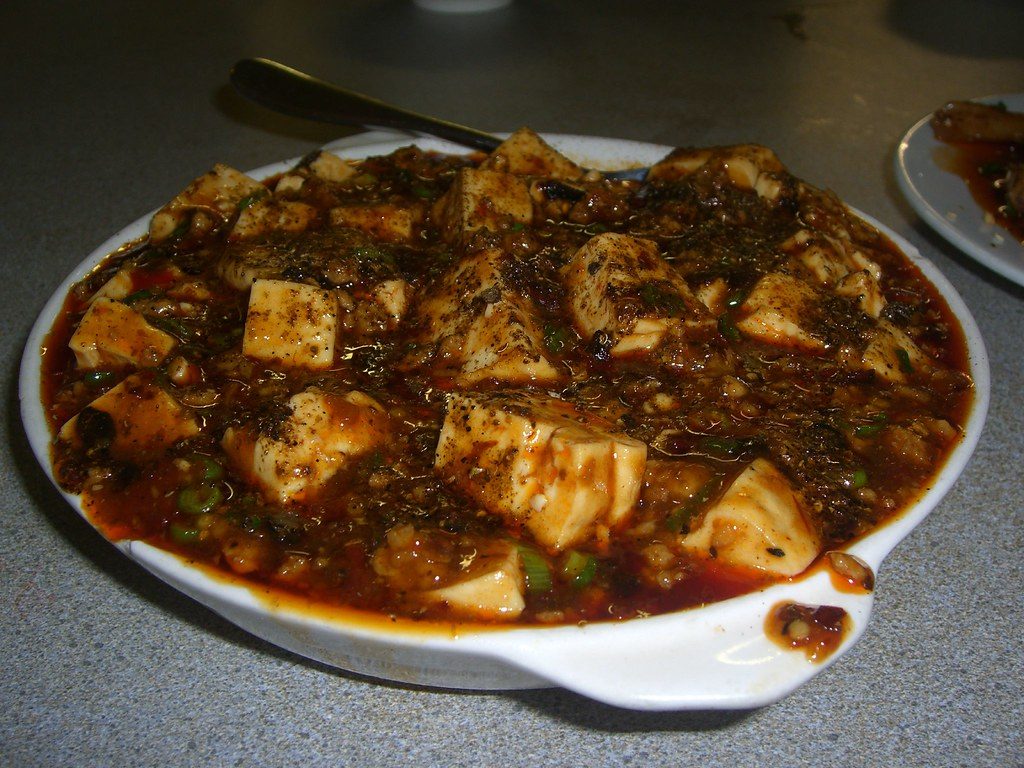
One of the most famous dishes to come out of Sichuan: soft tofu simmered in a fermented chilli sauce until each cube is slippery and loaded with flavour. The name refers to the pockmarked (*ma*) wife (*po*) of a Chengdu cook who, legend says, invented it in the 19th century. The star ingredient is *doubanjiang* (fermented chilli bean paste).
Braising: 1 tsp cornstarch; 2 tsp Sichuan peppercorns (increase to 3 tsp if extra numbing, reduce to 1 tsp if the peppercorns are extra fresh); 1 tbsp peanut oil (or vegetable oil); 3 tbsp doubanjiang (reduce to 2 tbsp for less salty / less spicy); 2 green onions, sliced; 1 block firm or medium-firm tofu, cut into 1.5 cm (1/2 inch) squares; 1 cup low-sodium chicken stock (or water); 2 tsp homemade chili oil; 1/4 tsp five-spice powder; 1 tsp sugar (or to taste)
Method
Combine the ground meat, cooking wine, soy sauce and ginger in a small bowl and mix well.
Combine the cornstarch with 1 tbsp water in a small bowl and mix well; set aside.
Heat the oil and Sichuan peppercorns in a large nonstick skillet over medium-high heat. When the peppercorns turn dark brown and crispy, scoop them out and drain on a paper-towel-lined bowl, saving them to grind for garnish.
Add the ground meat and doubanjiang and cook over medium heat, chopping the meat into small bits with a spatula, until the pork is evenly coated with the doubanjiang and fully cooked through. Add the green onion and stir-fry for another minute.
Spread the tofu evenly on top of the ground pork; add the chili oil, five-spice powder and sugar; pour in the broth and bring to a simmer. Simmer covered over medium-low heat for 8–10 minutes, until the sauce is reduced to half the original amount.
Grind the fried Sichuan peppercorns. Mix the cornstarch water again until fully dissolved and swirl it into the skillet to thicken the sauce. Garnish with the ground peppercorns.
Good to know: The doubanjiang brand matters — the dish is designed to be salty and served with rice. Vegetarian versions use mushrooms instead of pork. Do not use silken tofu; firm or medium-firm holds its shape.
Northern China's classic crescent dumpling — thin wheat wrapper around a juicy filling, sealed with pleats. Folk stories and theories abound about the origin of the dumpling and its name *jiaozi*; it is traditionally eaten at Lunar New Year. The version below is the potsticker (pan-fried) method; boiled and steamed are the other two traditional methods.
⏱ Serves 4.
Ingredients
Plain flour, 400 g
Warm water, 200 ml
Minced pork, fatty, 400 g
Chinese cabbage, finely shredded, 400 g
Spring onion, 4
Ginger, 20 g
Soy sauce, 2 tbsp
Sesame oil, 1 tbsp
Cold stock, 80 ml
Neutral oil, 3 tbsp
Black vinegar, for dipping, to taste
Salt, to taste
Method
Knead the dough from the flour and warm water for 8 minutes; rest under film for 30 minutes.
Salt the shredded cabbage, leave 15 minutes, then squeeze dry by hand.
Work the pork with the ginger, soy sauce and sesame oil in one direction, trickling in the cold stock until the mass turns tacky; fold in the cabbage and spring onion.
Roll 8 cm rounds, thinner at the edge and thicker in the middle; add filling and pleat one side shut.
Heat the oil in a pan, set the dumplings seam up and fry for 3 minutes to a golden base.
Pour in 100 ml water, cover at once; after 7 minutes take the lid off, let the water evaporate and return to a crisp base.
Good to know: Omnivore's Cookbook's version steams the dumplings in a bamboo steamer lined with napa cabbage leaves for 10 minutes over high heat (15–20 minutes from frozen). The filling is traditionally pork + cabbage, but shrimp, lamb, egg + chive and mushroom fillings are also common.