Egyptian cooking is built on pantry staples turned into comfort: lentils, rice, fava beans and chickpeas, sharpened with cumin, garlic and lemon. The three dishes on this page are the ones Egyptians actually eat every week — koshari from Cairo's street carts, molokhia with its garlic-coriander tasha, and ful medames, the breakfast that has fed Cairo for centuries.
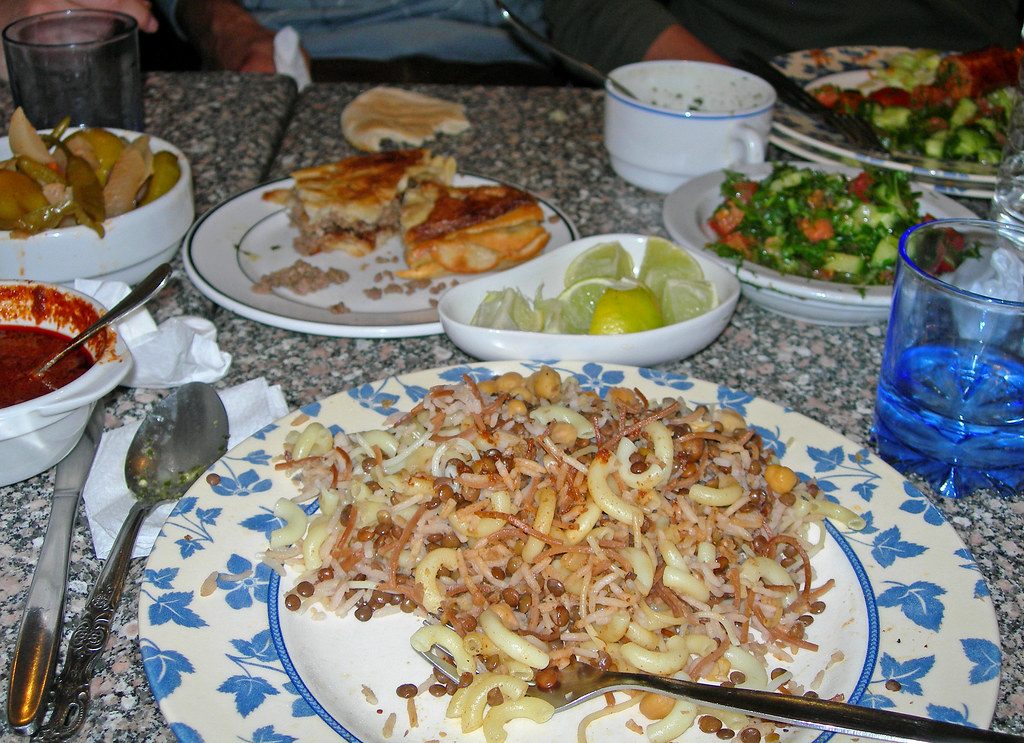
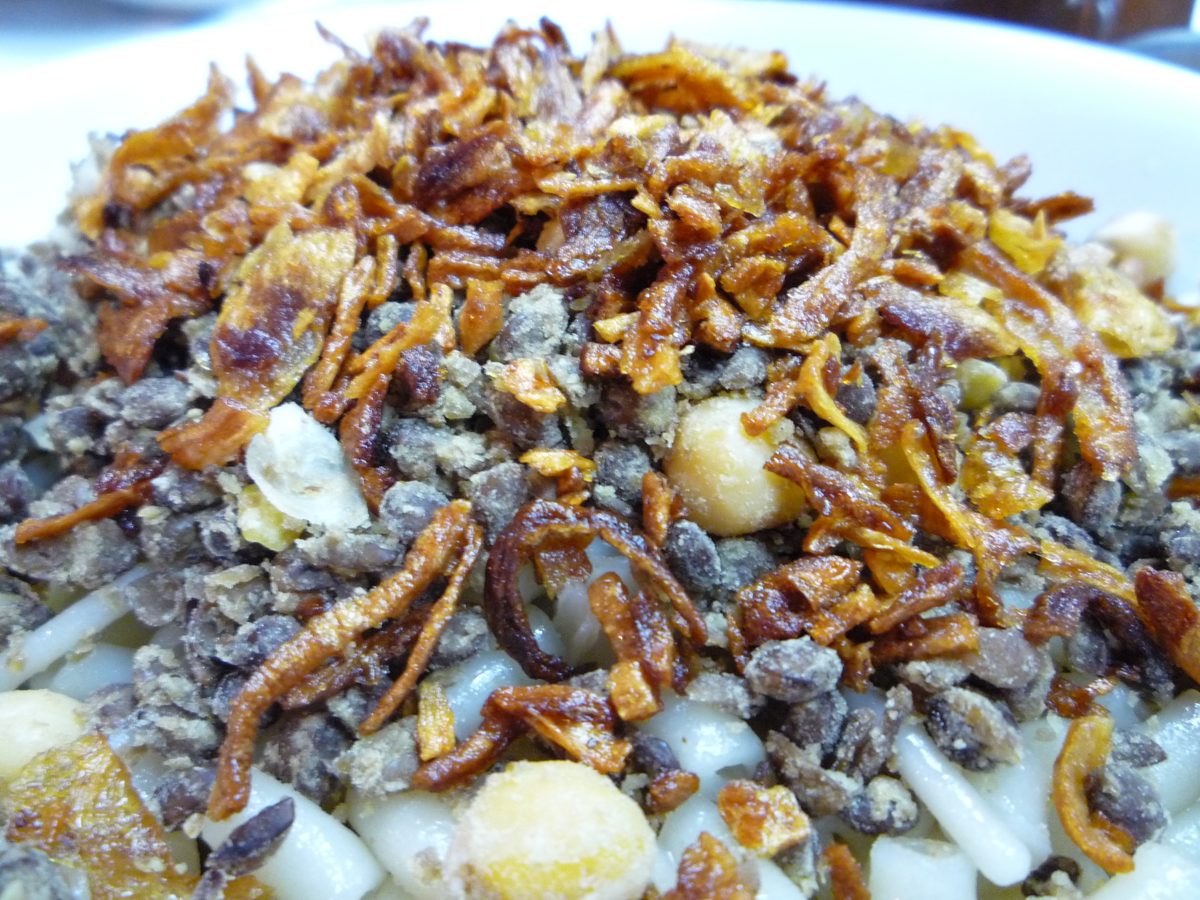
Egypt's national dish — a layered Cairo street-food bowl of lentils, rice, pasta and chickpeas with tomato sauce and crispy onions. The Mediterranean Dish calls it "the national dish of my birthplace, Egypt" and "a cousin to the Middle Eastern Mujadara", built from pantry staples.
Crispy onion topping: 1 large onion, sliced into thin rings; salt; 1/3 cup all-purpose flour; 1/2 cup cooking oil
Tomato sauce: cooking oil; 1 small onion, grated; 4 garlic cloves, minced; 1 tsp ground coriander; 1/2–1 tsp crushed red pepper flakes (optional); 1 can (28 oz) tomato sauce; salt and pepper; 1–2 tbsp distilled white vinegar
Koshari: 1 1/2 cups brown lentils, picked over and well-rinsed; 1 1/2 cups medium-grain rice, rinsed, soaked in water for 15 minutes, drained; 1/2 tsp each salt and pepper; 1/2 tsp coriander; 2 cups elbow pasta; cooking oil; water; 1 (15 oz) can chickpeas, rinsed, drained and warmed
Method
Crispy onions: Sprinkle the onion rings with salt, then toss them in the flour to coat. Shake off excess flour. In a large skillet, heat the cooking oil over medium-high heat and cook the onion rings, stirring often, until caramelized brown and crispy but not burned (15–20 minutes).
Tomato sauce: In a saucepan, heat 1 tbsp cooking oil. Add the grated onion and cook on medium-high until translucent gold (do not brown). Add the garlic, coriander and red pepper flakes, if using, and sauté briefly until fragrant (30–45 seconds). Add the tomato sauce and vinegar; season with salt and pepper. (See sourcing note.)
Lentils: Bring lentils and 4 cups of water to a boil in a medium pot over high heat. Reduce heat to low and cook until just tender (15–17 minutes). Drain and season with a little salt.
Rice and lentils: Combine the par-cooked lentils and the drained rice in the saucepan over medium-high heat with 1 tbsp cooking oil, salt, pepper and coriander. Cook for 3 minutes, stirring regularly. Add warm water to cover the rice and lentil mixture by about 1 1/2 inches (about 3 cups). Bring to a boil, then cover and cook until all the liquid has been absorbed and both rice and lentils are cooked through (about 20 minutes).
Pasta: While the rice and lentils cook, cook the elbow pasta in boiling salted water with a little oil until al dente. Drain.
Assemble: Fluff the rice and lentils with a fork and transfer to a serving platter. Top with the elbow pasta and half of the tomato sauce, then the chickpeas, then half of the crispy onions. Serve, passing the remaining sauce and crispy onions separately.
Good to know: The sauce step's simmering line was truncated in the retrieved excerpt; step 2 as written follows only the recipe's own ingredient list (tomato sauce + vinegar, salt, pepper). No simmer time is claimed because the source excerpt did not show one. Regional variation: Alexandrian "koshari asfar" (yellow rice with red lentils, served with smoked herring) is a different dish from the Cairo layered version above.
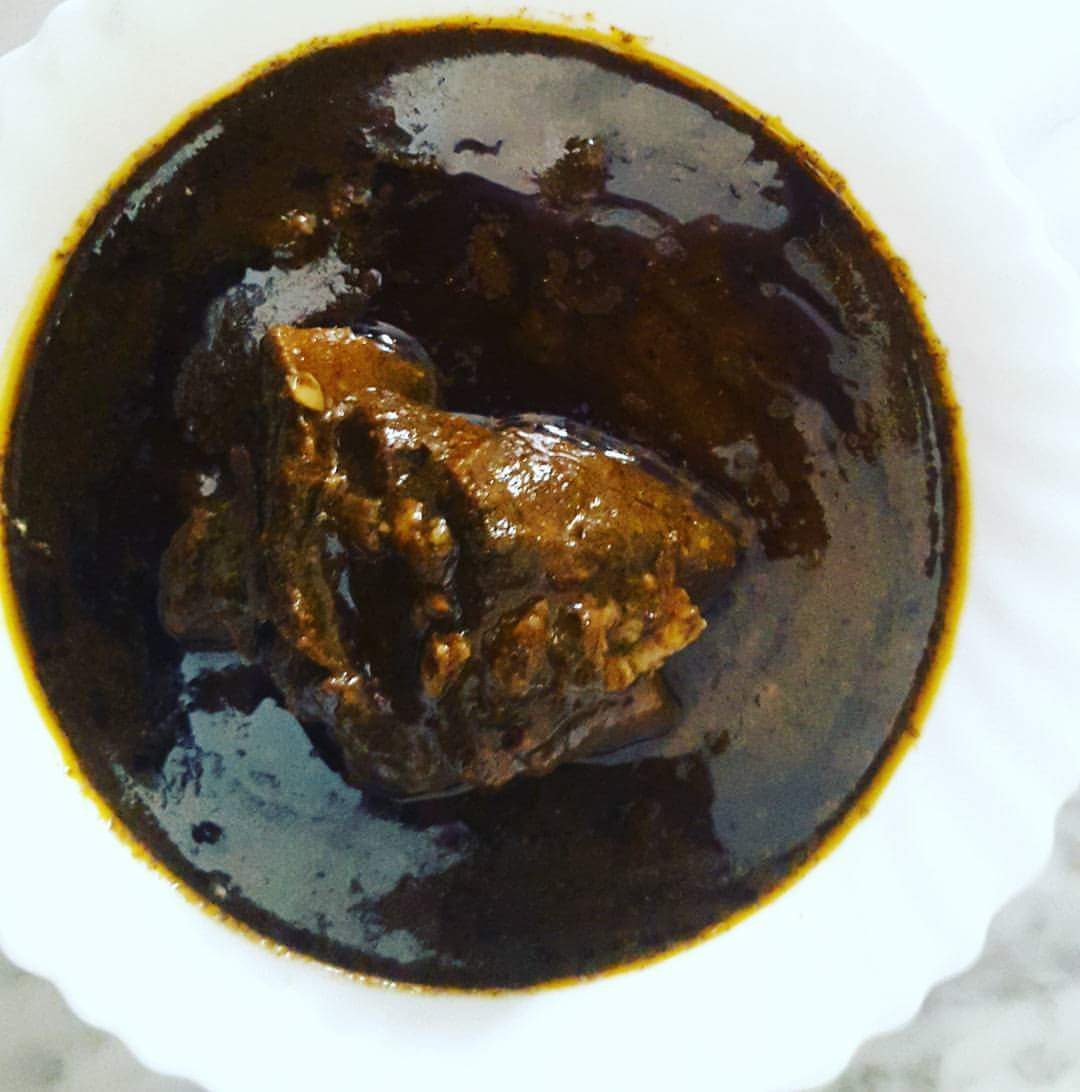
Soup of jute mallow leaves (Corchorus olitorius). 196 Flavors notes that in Egypt mlokhia is called "the vegetable of the kings" and its use is said to date back to Pharaonic times; the recipe appears in the 14th-century Egyptian cookbook *Kanz al-Fawa'id fi Tanwi' al-Mawa'id*. Traditionally served with chicken or rabbit and rice, finished with the garlic-coriander *tasha* (also called *taqliya*).
1 tbsp extra virgin olive oil, ghee, butter, or a combination
5 large garlic cloves, minced
1 tsp ground coriander
1 tsp salt, plus a few grinds of black pepper
Method
Bring the chicken stock to a low boil in a large pot over high heat.
Turn the heat off completely, then add the frozen minced molokhia. Stir occasionally as the greens slowly melt into the broth, about 15 minutes. (Do not boil the leaves, so they stay vibrant green.)
Make the tasha: In a medium frying pan, combine the olive oil/ghee/butter and the minced garlic over medium-high heat. Let the garlic sizzle, stirring occasionally, until fragrant (about 30 seconds), then keep stirring until golden — before it browns. Remove from heat and stir in the ground coriander.
Pour all of the tasha into the pot of molokhia.
Season with the salt and black pepper, mix, warm gently and serve (traditionally with rice and chicken on the side).
Good to know: The classic full meal (196 Flavors) cooks a whole chicken in broth with onion, cardamom, bay and tomato paste, serves the molokhia over rice with the grilled chicken, and adds lemon juice. The Mediterranean Dish version above is the soup alone. Levantine versions exist, but the Egyptian version is defined by the *tasha* and serving with rice.
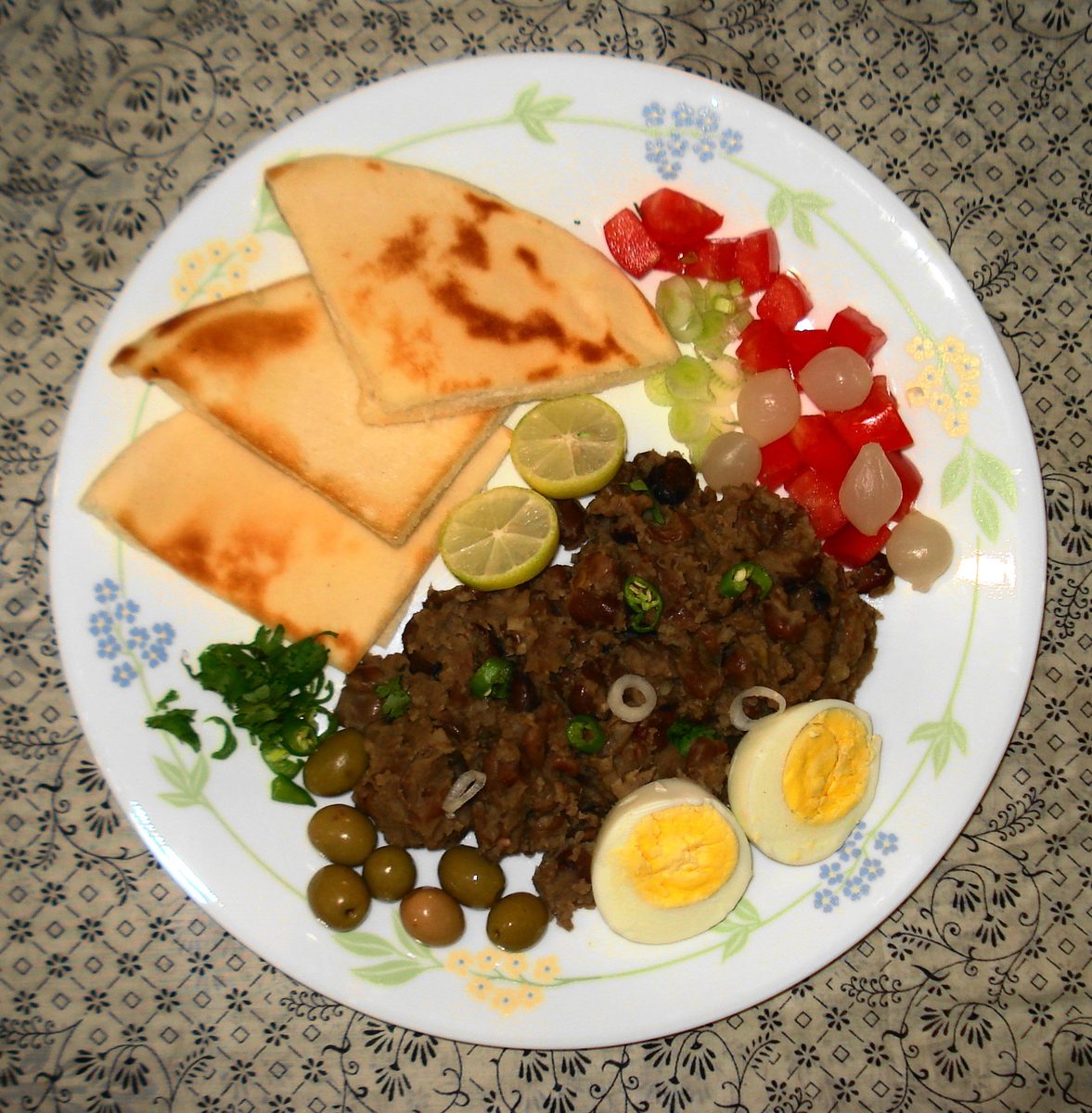
Stewed fava beans dressed with olive oil, cumin, garlic and lemon; Saveur calls it "best known as Egypt's national dish" and AfriFoodNetwork notes it is "particularly associated with Cairo and Giza". Eaten for breakfast, lunch or dinner, usually with bread. Note: tahini is a Levantine addition, not classic Egyptian.
Ingredients
2 (15 oz) cans fava beans, drained and rinsed
1/4 cup fresh lemon juice
1/4 cup olive oil, plus more to garnish
2 tsp ground cumin
1/4 tsp cayenne
4 cloves garlic, peeled and mashed
Kosher salt and freshly ground black pepper, to taste
2 hard-boiled eggs, cut into 6 wedges each
2 tbsp finely chopped parsley
Method
Place beans in a 2-qt saucepan and cover with water by 1 inch. Place over medium heat and bring to a boil; cook until beans are tender, about 8 minutes.
Drain beans and transfer to a bowl; add lemon juice, oil, cumin, cayenne, garlic, salt and pepper. Stir until beans are lightly broken up.
Transfer to a serving platter, surround with egg wedges, drizzle with more oil and sprinkle with parsley before serving.
Good to know: The Mediterranean Dish version uses a spicy lemon-garlic sauce with chopped hot peppers and tops the beans with diced tomato and chopped parsley; from-scratch versions start from 1 cup dried fava beans soaked overnight and cooked about 1 hour. Common toppings in Egypt: chopped tomato, onion, parsley, chilli and hard eggs.