Moroccan cooking is slow cooking: the tagine pot, the Friday couscous steamed three times over its broth, and harira, the soup that breaks the Ramadan fast. Preserved lemons, saffron, ginger and cinnamon run through all three dishes on this page, and the recipes below follow the classic versions — chicken tagine with preserved lemons and olives, couscous with seven vegetables, and harira thickened with tadouira.
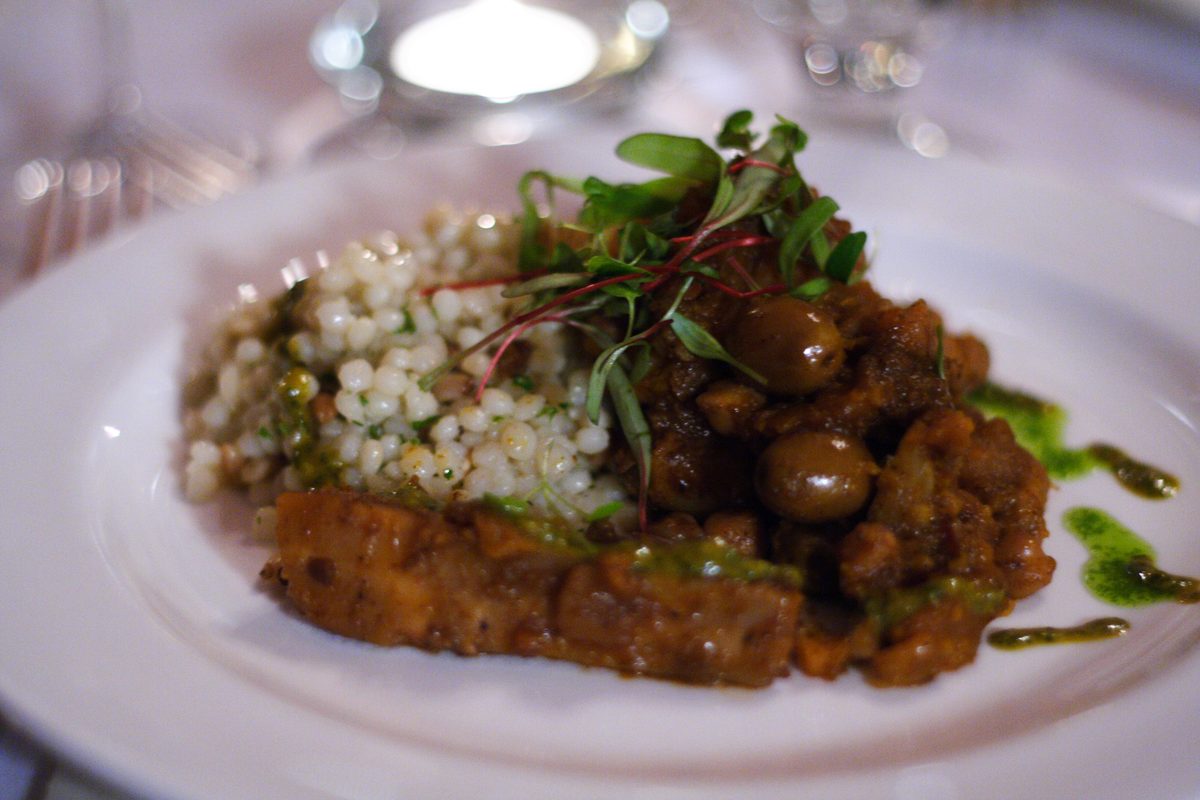
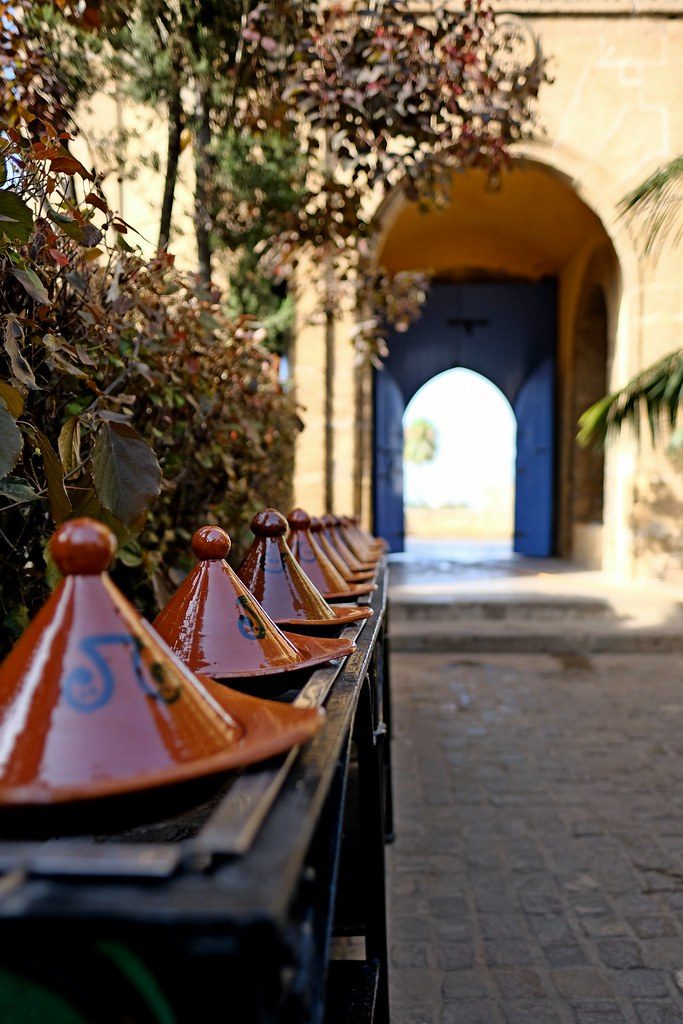
Morocco's signature slow-cooked stew, traditionally cooked in the conical clay pot of the same name (*tagine*). The classic version (*djaj mqualli*) braises chicken in onions, ginger, saffron and turmeric, finished with salty-sour preserved lemon and green olives.
1 chicken, 3–4 lb, cut into 8 pieces (or 3–4 lb chicken thighs and legs)
Salt
3 cloves garlic, minced
1 onion, chopped
Rind from 1 preserved lemon, rinsed in cold water, pulp discarded, rind cut into thin strips (or whole thin slices of regular lemon)
1 cup green olives, pitted
1/2 cup raisins
1/2 cup water
1/4 cup chopped fresh cilantro
1/4 cup chopped fresh flat-leaf parsley
Method
Marinate: Combine all the spices — paprika, cumin, ginger, turmeric, cinnamon, black pepper — in a large bowl. Pat the chicken pieces dry, put in the bowl and coat well with the spice mixture. Let the chicken stand for one hour in the spices.
Brown the chicken: If using a clay tagine, soak the bottom in water overnight first and place it on a heat diffuser. Heat the olive oil in the tagine (or a large, shallow, thick-bottomed, covered skillet) on medium-high heat. Sprinkle the chicken pieces very lightly with salt (go easy — the olives and preserved lemons are salty) and place skin-side down for 5 minutes, until lightly browned.
Lower the heat to medium-low, add the garlic and onions over the chicken. Cover and let cook for 15 minutes.
Turn the chicken pieces over. Add the lemon slices, olives, raisins and 1/2 cup water. Bring to a simmer on medium heat, then lower the heat to low, cover, and cook for an additional 30 minutes, until the chicken is cooked through and quite tender.
Good to know: Tagine Time's version uses grated onions, a herb bundle and no raisins, with 250 ml (1 cup) water and 150 g olives; the preserved lemon and olives go in only for the last 10–15 minutes uncovered so the sauce turns thick and glossy. Raisins are optional and not universal.
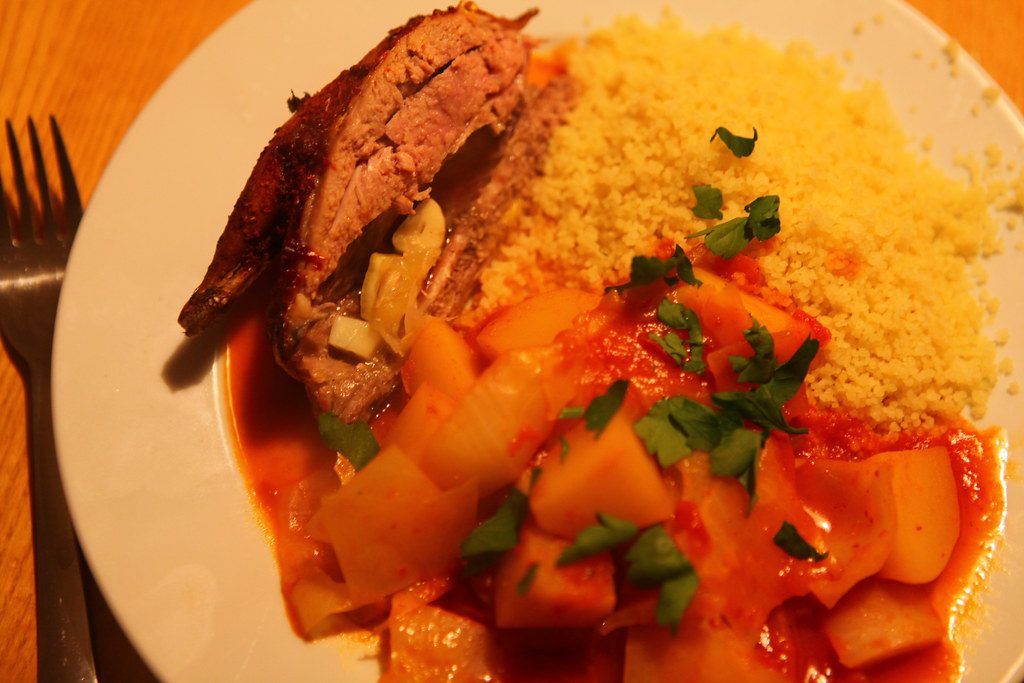
Morocco's Friday lunch: semolina grains steamed two or three times over a broth of meat, chickpeas and seasonal vegetables, then piled on one big platter and soaked with the broth. Seven is the traditional count of vegetables — honoured in the breach; the market decides.
⏱ Prep 45 min; cook 1 hr 30 min; serves 6–8.
Ingredients
Stew: 500 g lamb or beef on the bone (shank, neck, short rib), cut into 5 cm pieces; 2 onions (about 300 g), one sliced thin, one grated; 4 cloves garlic (about 15 g), sliced; 1 tsp saffron (about 1 g), steeped in 3 tbsp hot water; 2 tsp ginger; 1 tsp turmeric; 1 tsp white pepper; 1/2 tsp cinnamon; 1 tbsp tomato paste (about 15 g)
The seven vegetables: 2 carrots (about 200 g), halved lengthwise; 2 turnips (about 300 g), quartered; 1/2 small cabbage (about 300 g), in wedges; 2 zucchini (about 300 g), halved; 1 large potato (about 250 g) and 1 sweet potato or pumpkin quarter (about 250 g), in large pieces; 1 bunch coriander stems or 2 celery stalks (the seventh — argued either way); plus chickpeas (per Taste of Maroc: 1/2 cup dried chickpeas, soaked overnight)
Couscous: 500 g medium couscous (rolled grain, not instant); 2 tbsp olive oil (about 25 g); 1 tsp salt; butter (about 40 g) for the final working
Method
The stew's first hour: Brown the meat lightly in the oil; add the onions, garlic, spices, tomato paste and preserved lemon (if using). Cook in the pot with water/broth, covered, about 1 hour (chicken: 25 minutes).
The vegetables' staggered entry (25 minutes): Add the carrots and turnips first; after 10 minutes, the cabbage and the seventh (celery or coriander stems); 10 more minutes, then finally the zucchini, potato and pumpkin — 5 to 8 minutes only. Each vegetable to its own tenderness, all holding their shapes.
The couscous's three steamings (while the stew runs): Work the dry couscous with the oil and a cup of the stew's broth, rubbing the grains apart between the palms; steam it over the stew 10 minutes. Repeat the moistening and steaming two more times (water with 1/2 tsp salt dissolved in the second and third additions).
Butter and assemble: Work the butter into the hot couscous. Mound it on a large platter, make a well in the middle, put in the meat and arrange the vegetables in a cone over the top, standing the carrots and zucchini up the sides. Serve with the broth on the side.
Good to know: Taste of Maroc's version uses 2.2 lb (1 kg) couscous, 2.2 lb meat and 6 cups water, with optional tfaya (caramelised onions and raisins) on top. The "seven" is a tradition, not a rule — some Fridays run five, some nine. Vegetarian version: omit the meat.
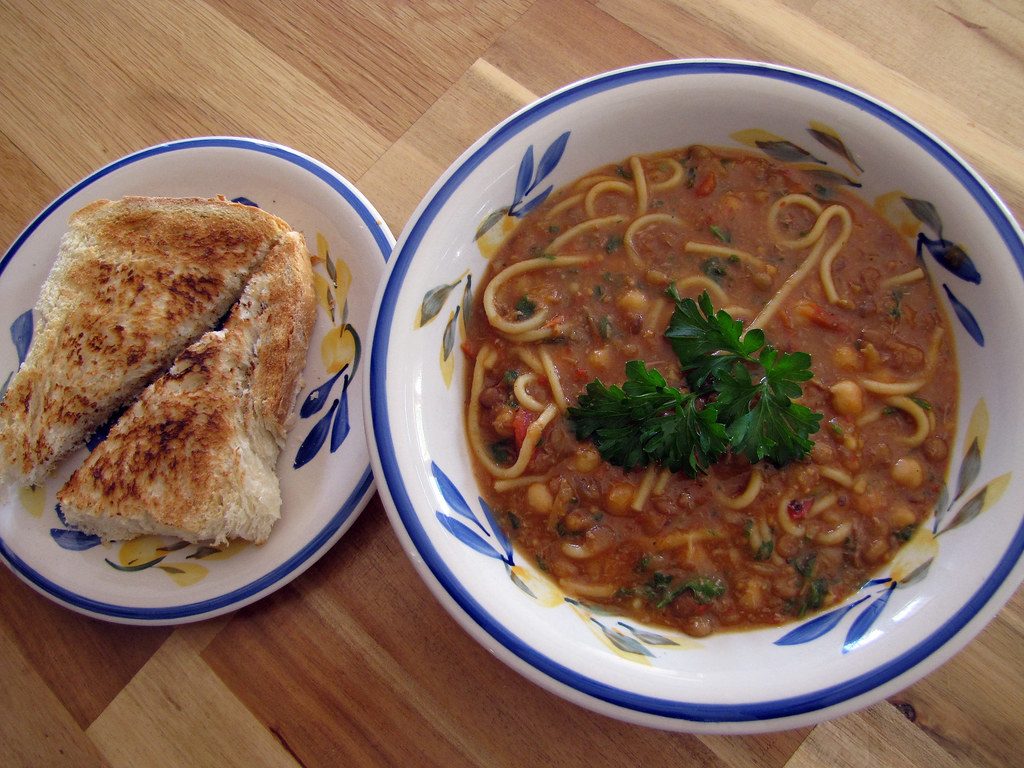
Morocco's best-known soup: tomato, lentils, chickpeas, celery and fresh herbs, thickened with a flour slurry (*tadouira*). Eaten year-round but most famously at Ramadan, served to break the fast — many Moroccans consider a Ramadan meal incomplete without it. The name comes from the Arabic *harir* (حرير), "silk", for its velvety texture.
⏱ Prep 45 min; cook 1 hr 30 min (pressure cooker; double if simmering); serves 6.
Ingredients
8 oz lamb, beef or chicken, diced
3 tbsp vegetable or olive oil
Several soup bones (optional)
2 lb soft, ripe tomatoes (about 6 large)
1 handful dry chickpeas, soaked and peeled
2 handfuls dry green or brown lentils
1 large onion, grated
1 rib celery with leaves, chopped (or 1 small bunch Chinese celery)
1 small bunch flat-leaf parsley, finely chopped
1 small bunch cilantro, finely chopped
1 tbsp smen (optional)
1 tbsp salt
1 tbsp ginger
1 1/2 tsp black pepper
1 tsp ground cinnamon (optional)
1/2 tsp turmeric
3 tbsp tomato paste, combined with 1 or 2 cups water
3 tbsp uncooked rice OR broken vermicelli
1 cup flour, combined with 2 cups water (the *tadouira* thickener)
Lemon wedges and cilantro (optional), for garnish
Method
Ahead of time: Soak the chickpeas overnight. The next day, drain and peel them (press one by one between forefinger and thumb, or rub vigorously in a kitchen towel).
Make the soup: In a 6-quart or larger pressure cooker or stock pot, brown the meat in the oil over medium heat. Add the soup bones, peeled chickpeas, pureed tomatoes, grated onion, spices, smen (if using) and 3 cups (710 ml) water. Bring to a boil, cover and cook with medium pressure for 25 minutes (or simmer for 50–60 minutes).
Add the lentils, tomato paste mixture, chopped celery and herbs, and 8 1/2 cups (2 litres) water. Bring to a boil and cover.
If adding rice, cook with medium pressure for 30 minutes (or simmer 60 minutes); add the rice and continue cooking with pressure for another 15 minutes (or 30 minutes simmering). (If using vermicelli instead, add it near the end and cook until tender.)
Stir in the flour-and-water *tadouira* mixture, stirring constantly so it thickens the soup to a silky body without lumps. Taste and adjust salt.
Serve hot with lemon wedges; dates are the traditional accompaniment at iftar.
Good to know: The Mediterranean Dish version is vegetarian (no meat), uses 7 cups stock, canned crushed tomatoes, and both green and red lentils. Some families add a beaten egg at the end; cinnamon is optional and debated.